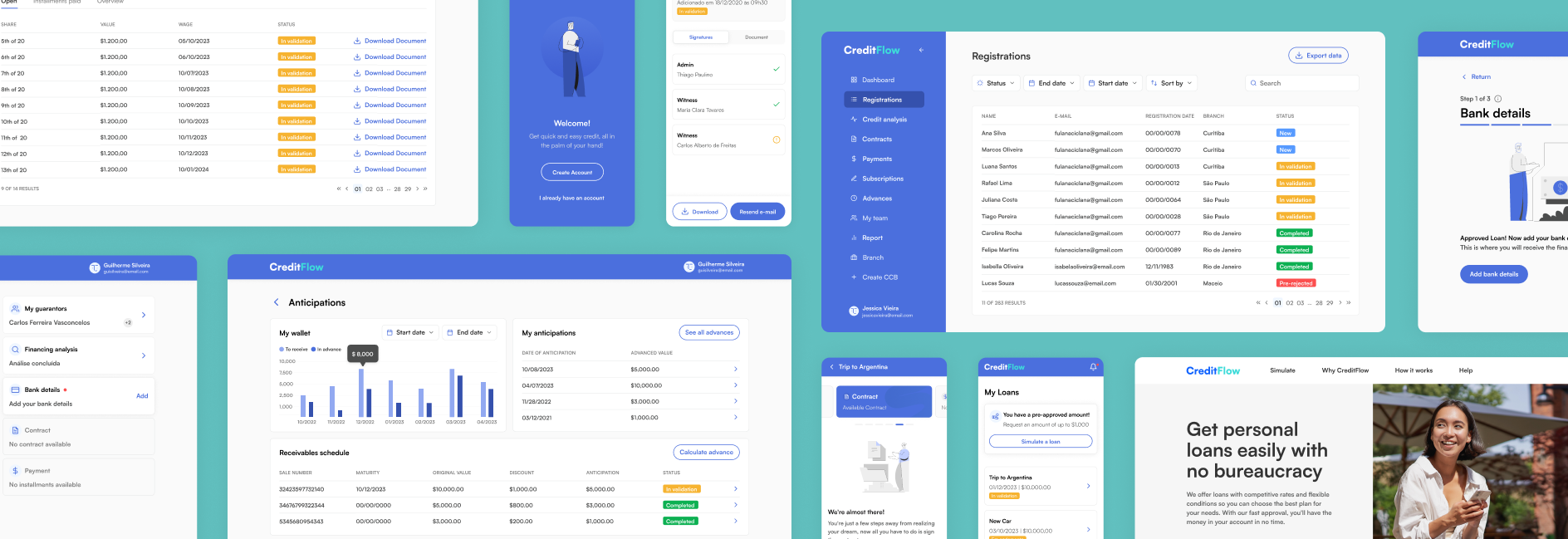
Creditflow is a white-label credit platform designed to simplify and accelerate the loan approval and analysis process. Aiming to deliver a tailored experience, the platform can be customized in terms of both visual identity and specific functionalities to meet the unique needs of each company.
In this project, the objective was to develop a responsive website and app for users to apply for loans, as well as a traditional (non-responsive) website for credit company administrators to manage financial transactions.
The development of a white-label platform presents specific challenges in interface design. Based on this, the key challenges for the project were identified.
Initially, research was conducted on digital credit platform products to gain a deeper understanding of the topic. Through a competitive analysis, companies directly or indirectly related to digital loans were examined, identifying key features that stood out in their product.
Nubank
The app uses simple terms with a friendly tone of voice to explain the loan process. Additionally, it highlights each step with large headings, making it easier for users to quickly scan and understand the information.
Creditas
The app features a minimalistic design with fewer visual elements, reducing cognitive load and making it easier for users to navigate each section. During the loan simulation process, the interactivity and use of brand colors stand out, providing a unique and engaging experience.
Inter Bank
The app segments in a clear way loans that are under review and those that have already been completed. It also shows the current step in the loan application process and how many steps are left until completion.
In the next phase, projects of white-label products were analyzed to contribute to the development of Creditflow. Several key points stood out as particularly important:
Communication with Development Team
While this is a step present in any project, it was found to be crucial to maintain constant communication with the development team to align customizable features and understand how these would impact both the front-end and back-end.
Adaptability
The platform’s screens must accommodate a variety of functionalities on a single screen. This means that it should be considered that one company might only have one credit analysis process, while another could have ten, for example.
Simplicity
The white-label product requires a structure that serves as a solid foundation for a wide range of companies. Therefore, simplicity provides the necessary flexibility to accommodate a broader set of features.
Aiming for scalability, the information architecture was designed with a focus on the flexibility of the screen structure to accommodate different customizations.
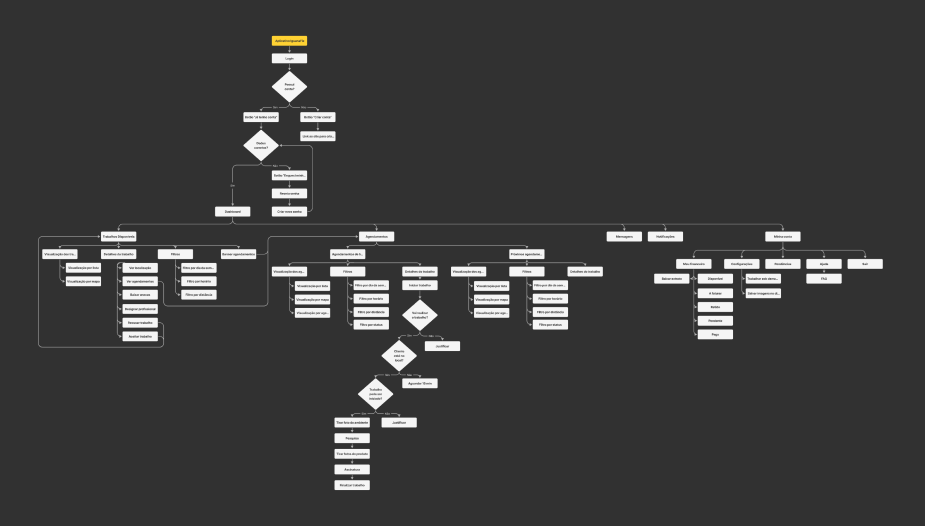
Information Architecture of the Administrator Section
Wireframes played a crucial role by facilitating the visualization of the layout and structure of each screen. Additionally, they allowed for the consideration and incorporation of functionality adaptations to meet the specific needs of the credit company.
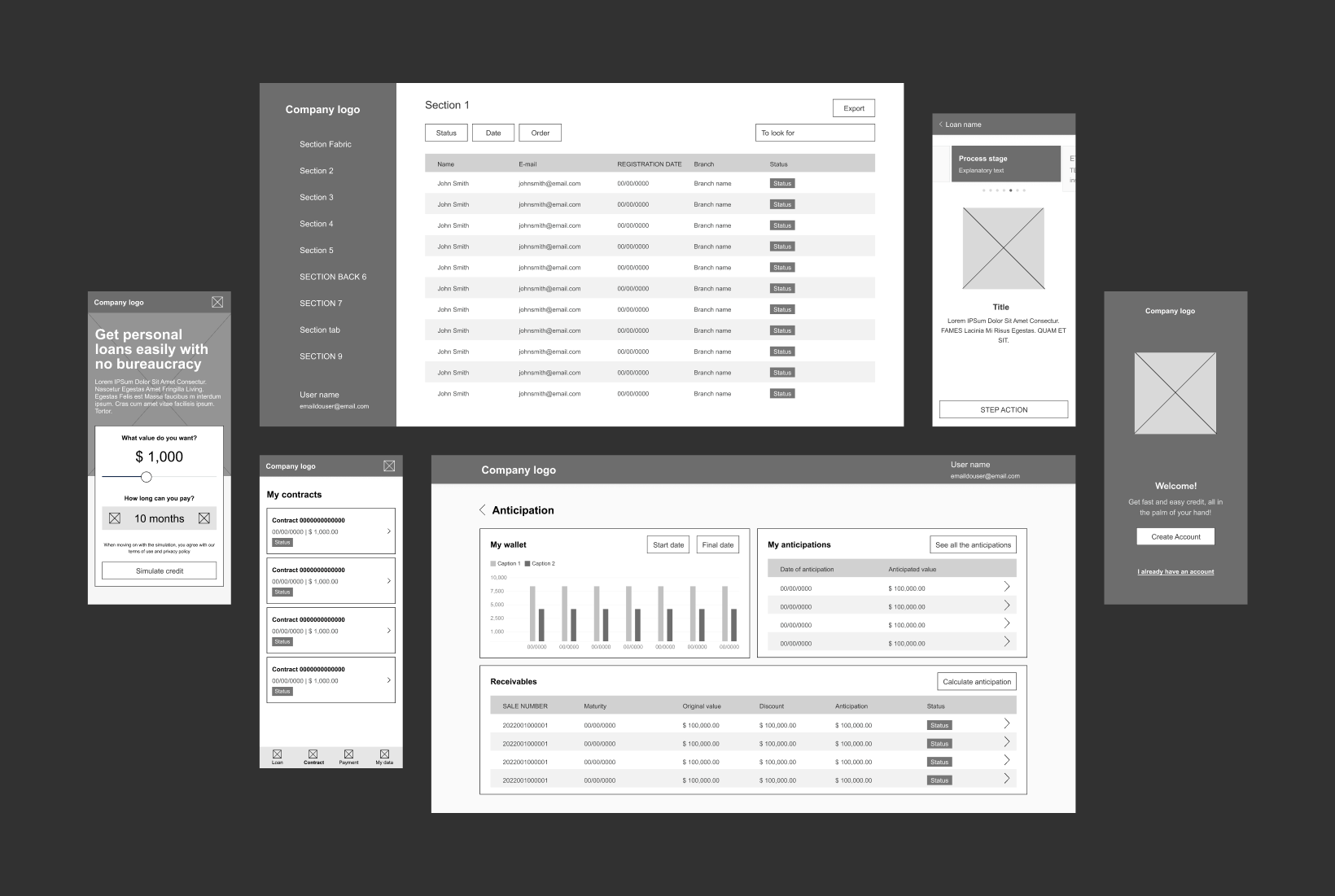
Wireframes of the Creditflow Platform
This project was initiated before Figma announced its new variables feature, which made the creation and maintenance of a style guide with variable colors a challenge. The project by Nacho Allendesalazar was crucial in resolving this issue by introducing the Themer plugin, which allows for style switching with a single click.
Additionally, starting with basic components such as text, buttons, and inputs facilitated the construction of more complex components and ensured modularity, allowing the platform to accommodate specific functionalities without compromising the visual integrity.
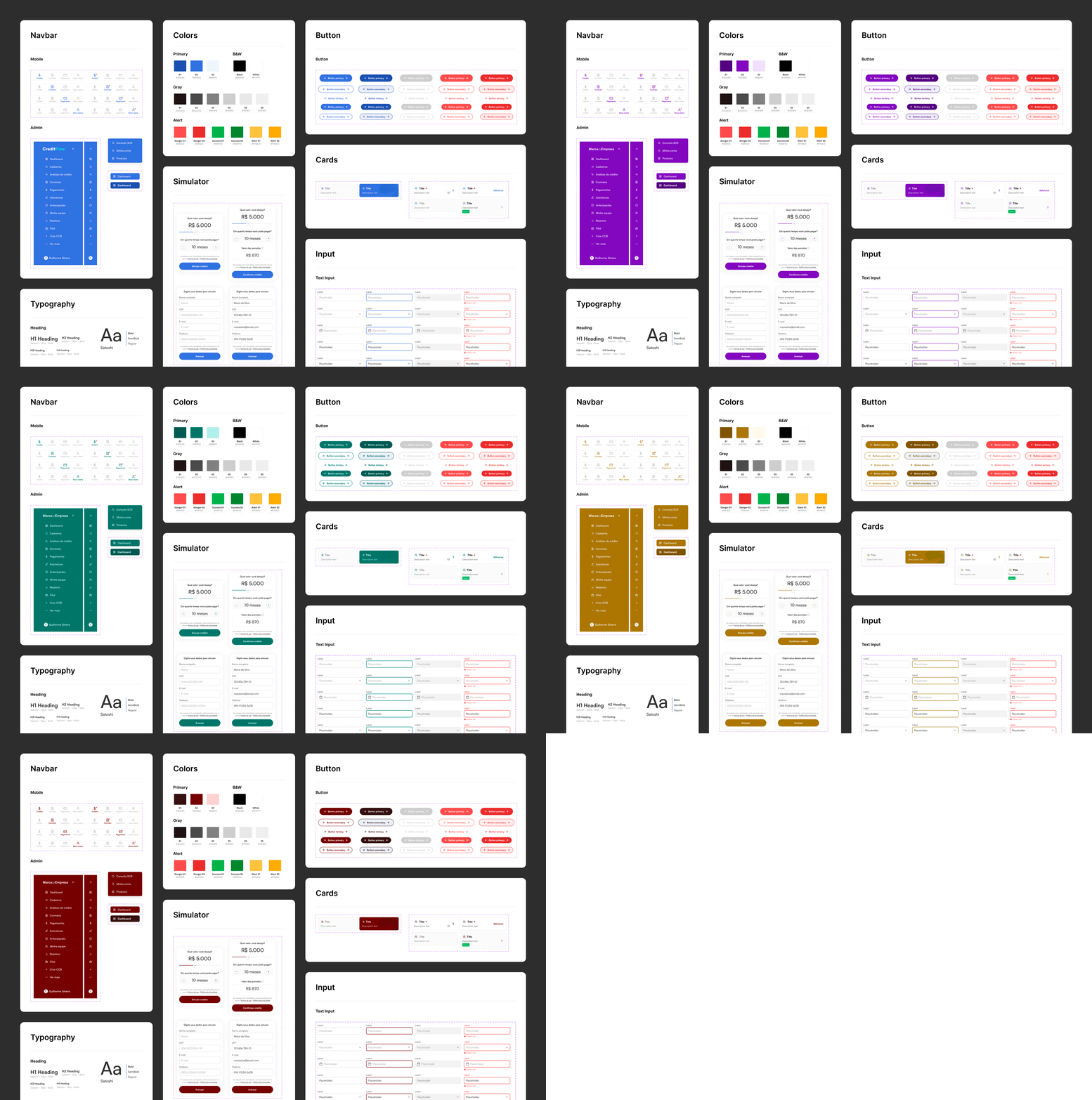
Components from the Design System
Loan Simulator
The customer’s first interaction with the platform happens through the Landing Page, where they can simulate the desired loan amount and choose the repayment period. The page is also responsible for converting leads for the companies by collecting the data of those who run the simulation.
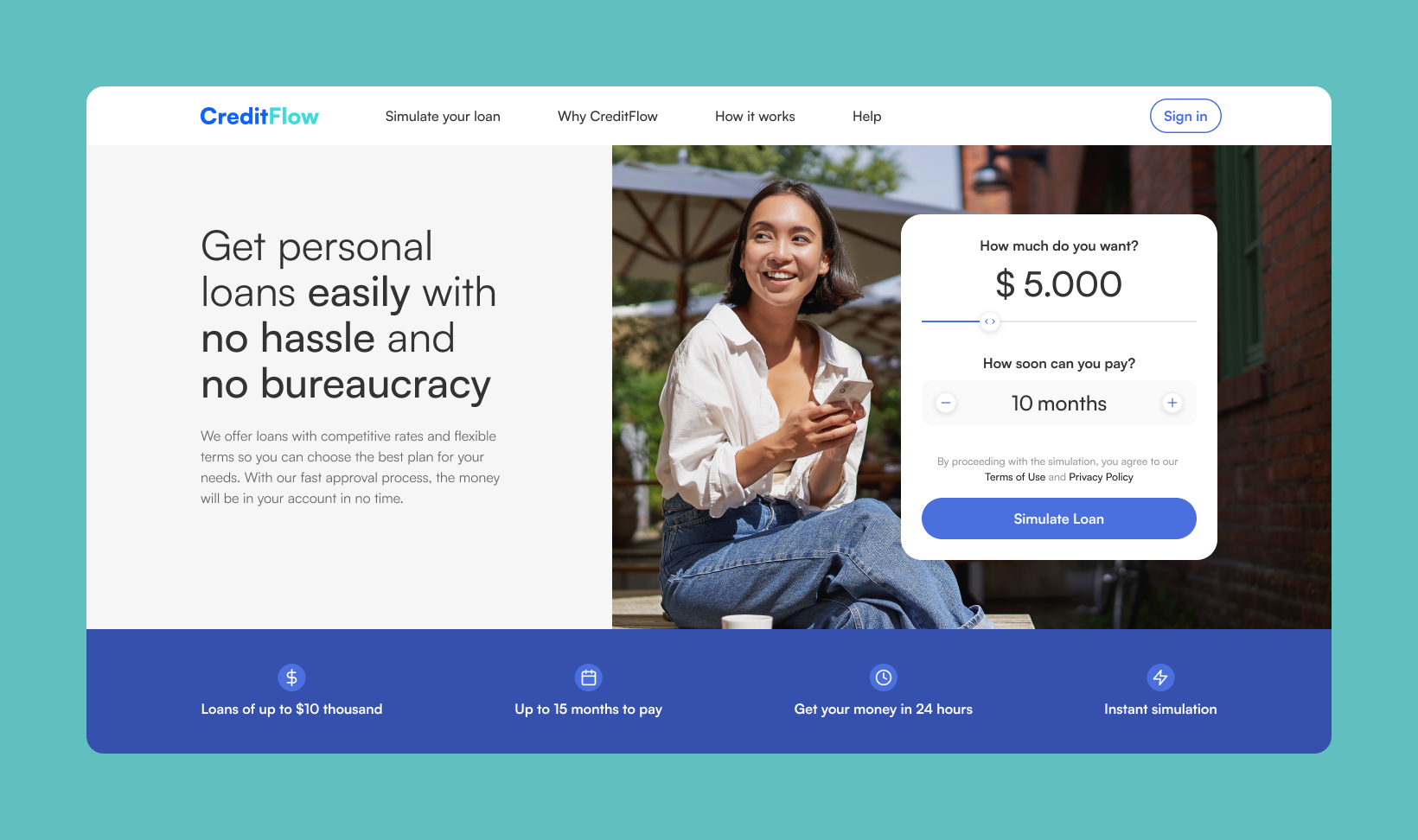
Landing page for the customer to simulate a loan
Administrator Area
Companies have full control over their credit operations through the administrator area. In this section, they can approve or reject loan applications based on customer data, as well as manage security steps, contracts, payments, and more. Components such as the sidebar menu and the action buttons within the customer registration had to be designed with potential content and functionality expansions in mind.
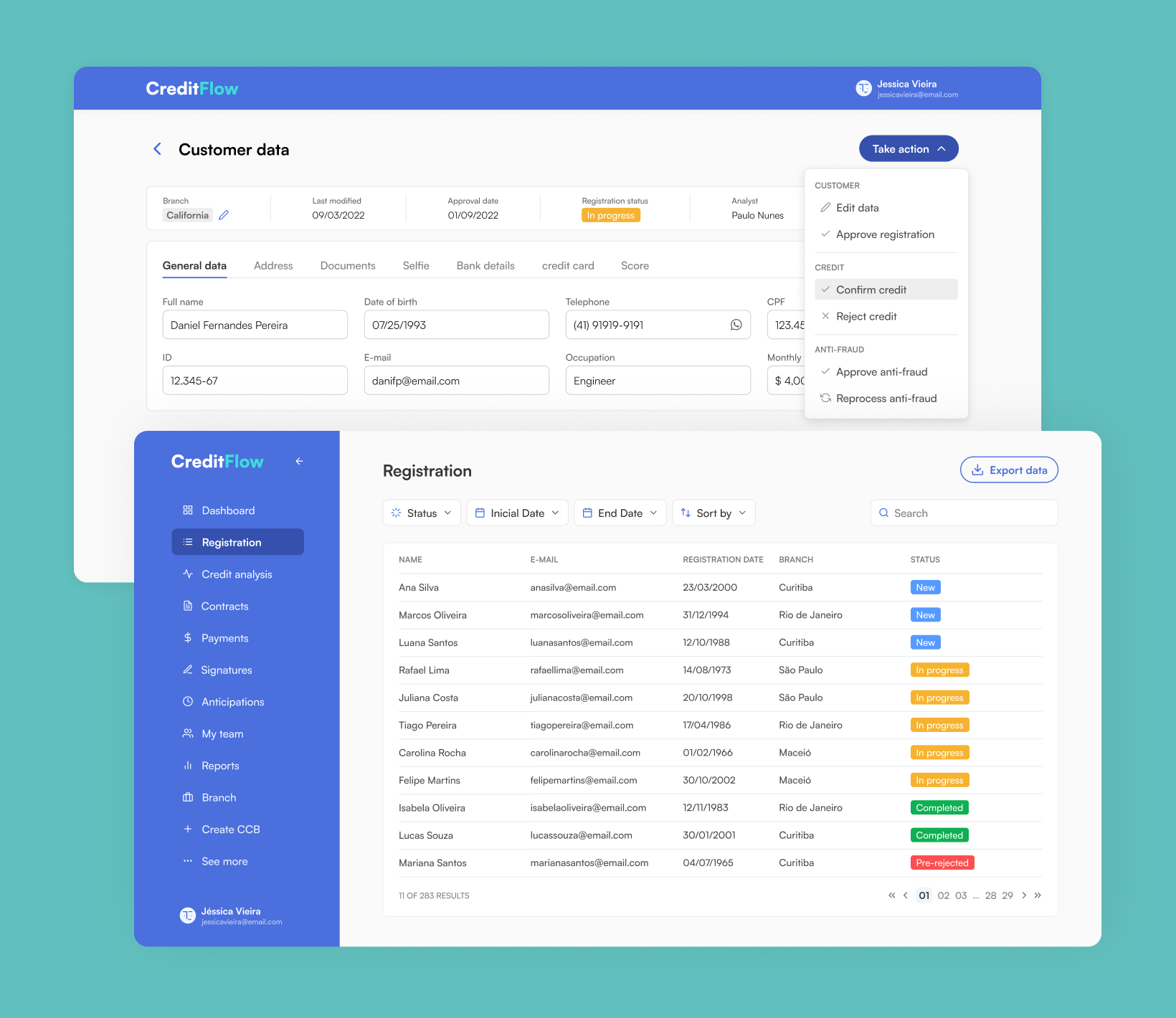
Administrator Area screens
Customer Area
Here, the customer can track all stages, from data registration to loan repayment. The focus of this area is to simplify complex processes by breaking them down into smaller steps, thereby reducing the customer's cognitive load.
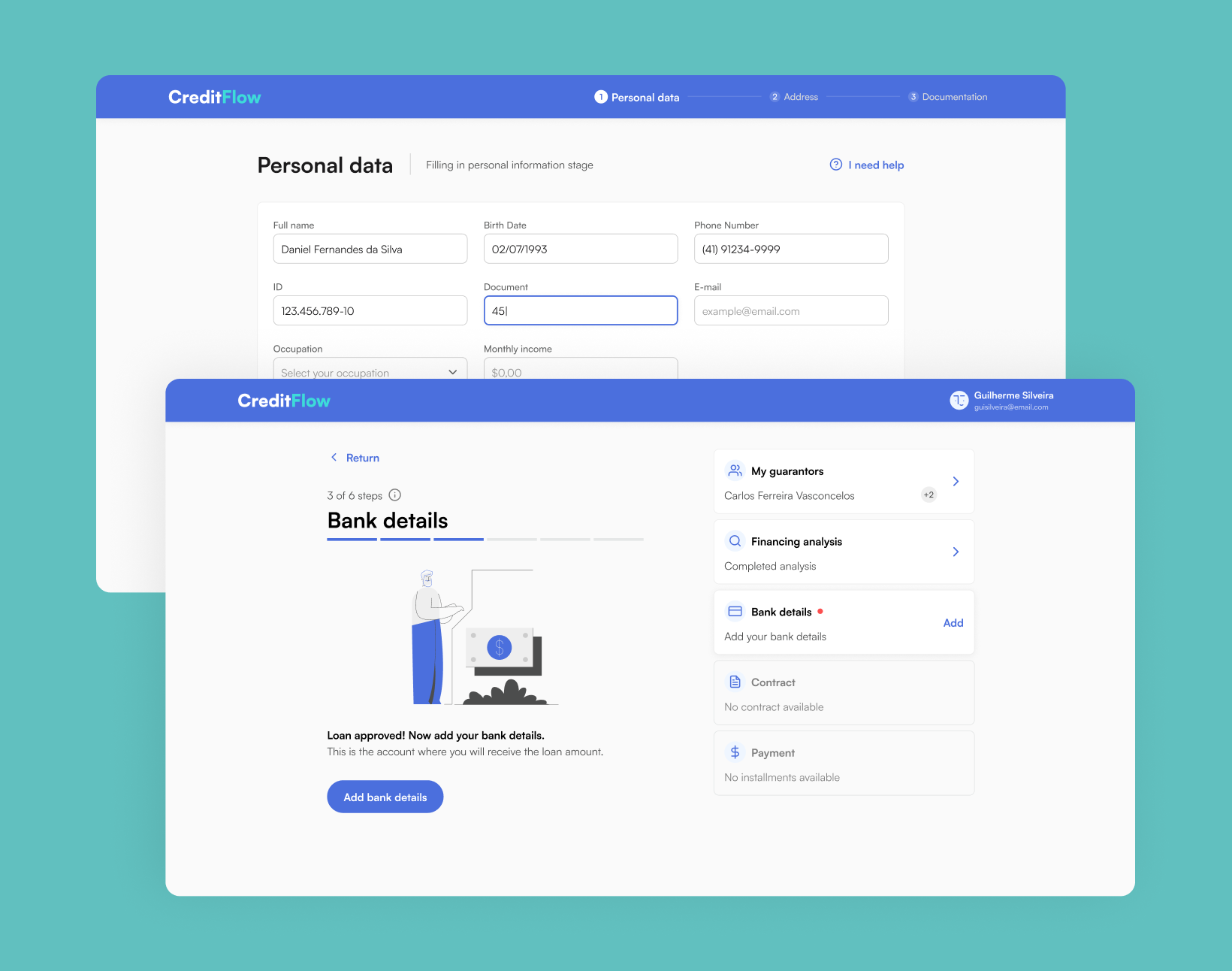
Customer Area screens
Customer Area
Finally, the app was developed to allow the customer to track their loan applications with greater ease and convenience.
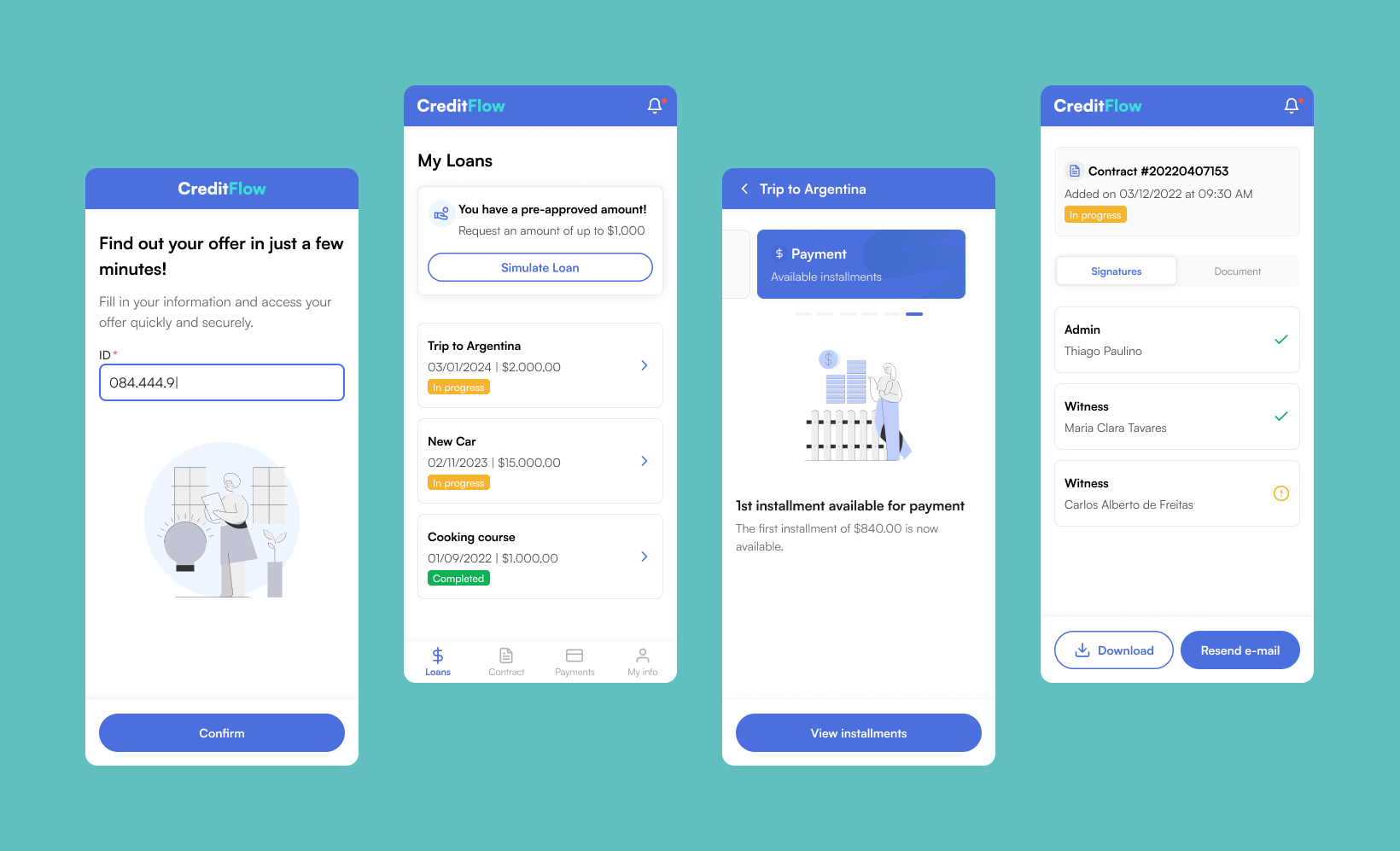
Customer app screens
This project, in which I participated from the initial concept to the final delivery, was challenging. It required balancing various functionalities, such as visual identity and feature customization, visual consistency across both the client and company areas, simplicity despite complex data, and ensuring good usability. In this regard, the next step for this project would be to conduct user research to validate whether the product meets their needs satisfactorily, ensuring that the improvement of the project remains continuous.